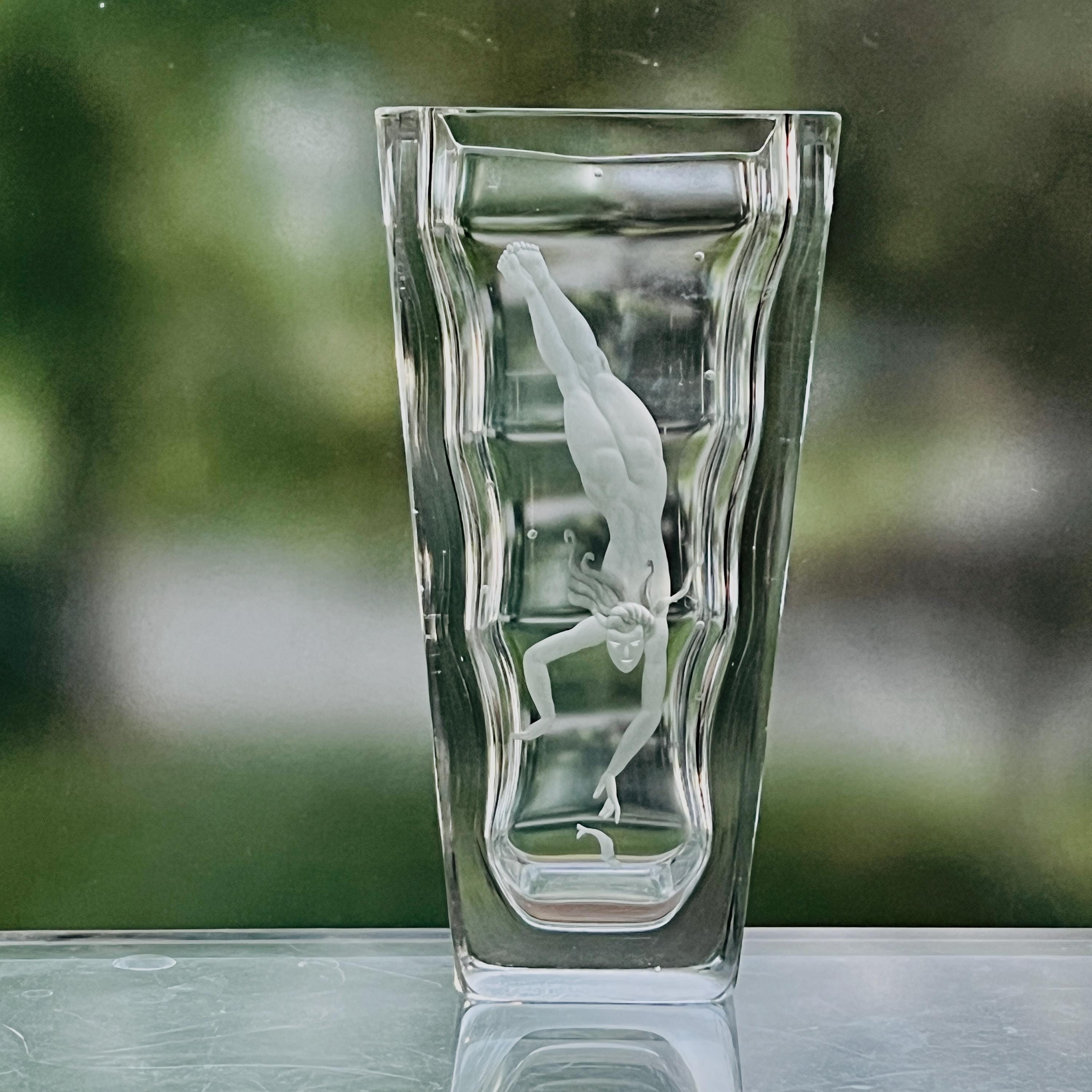
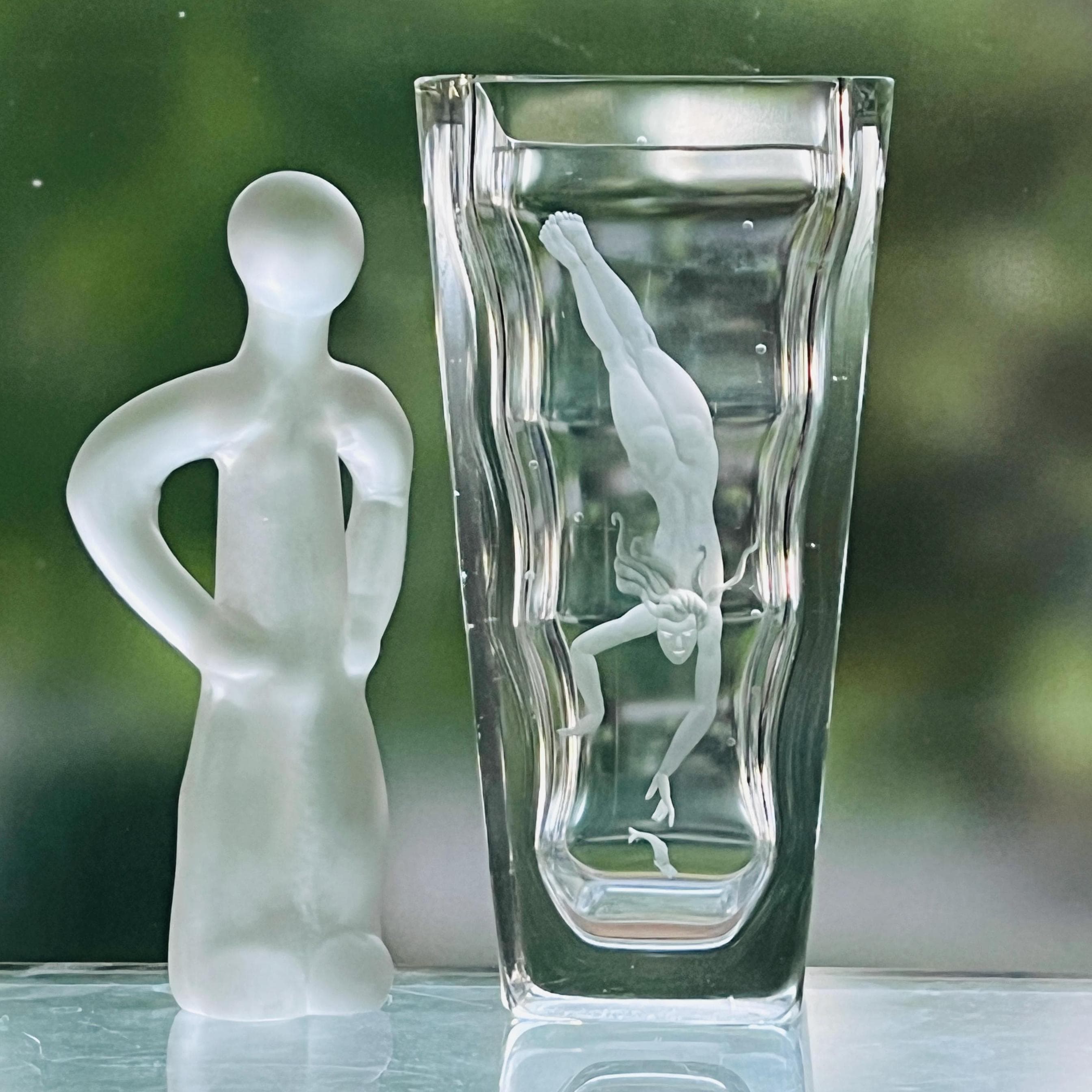
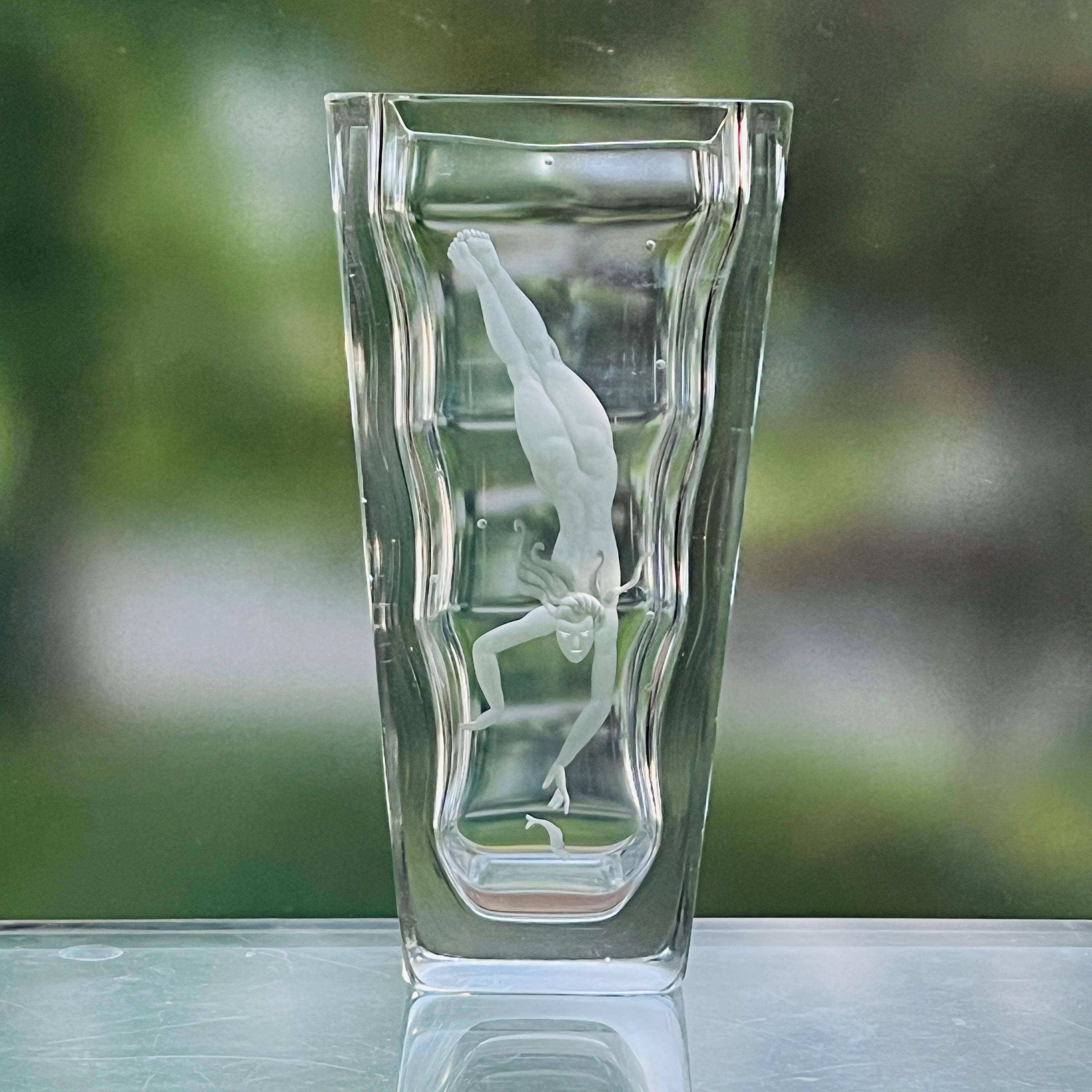
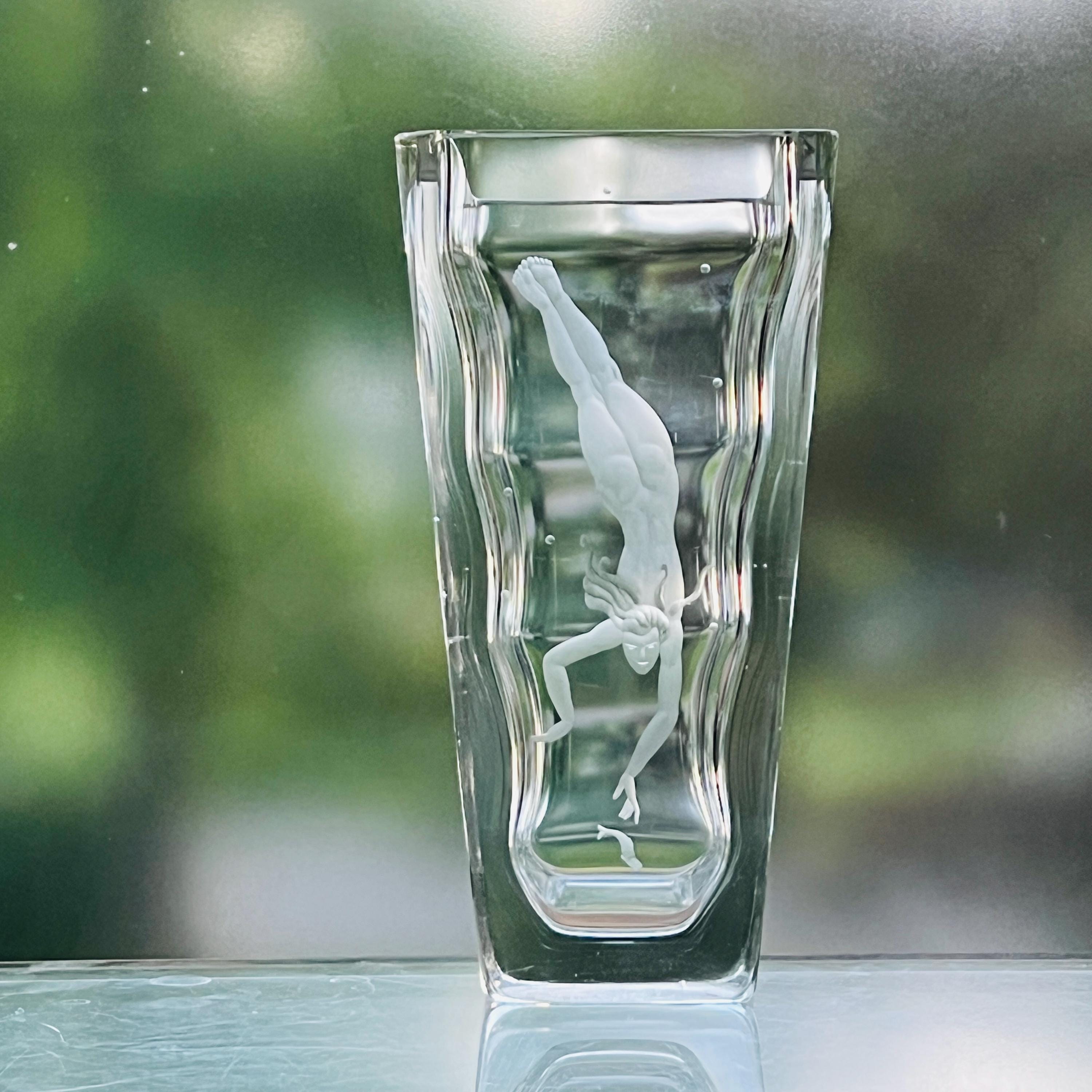

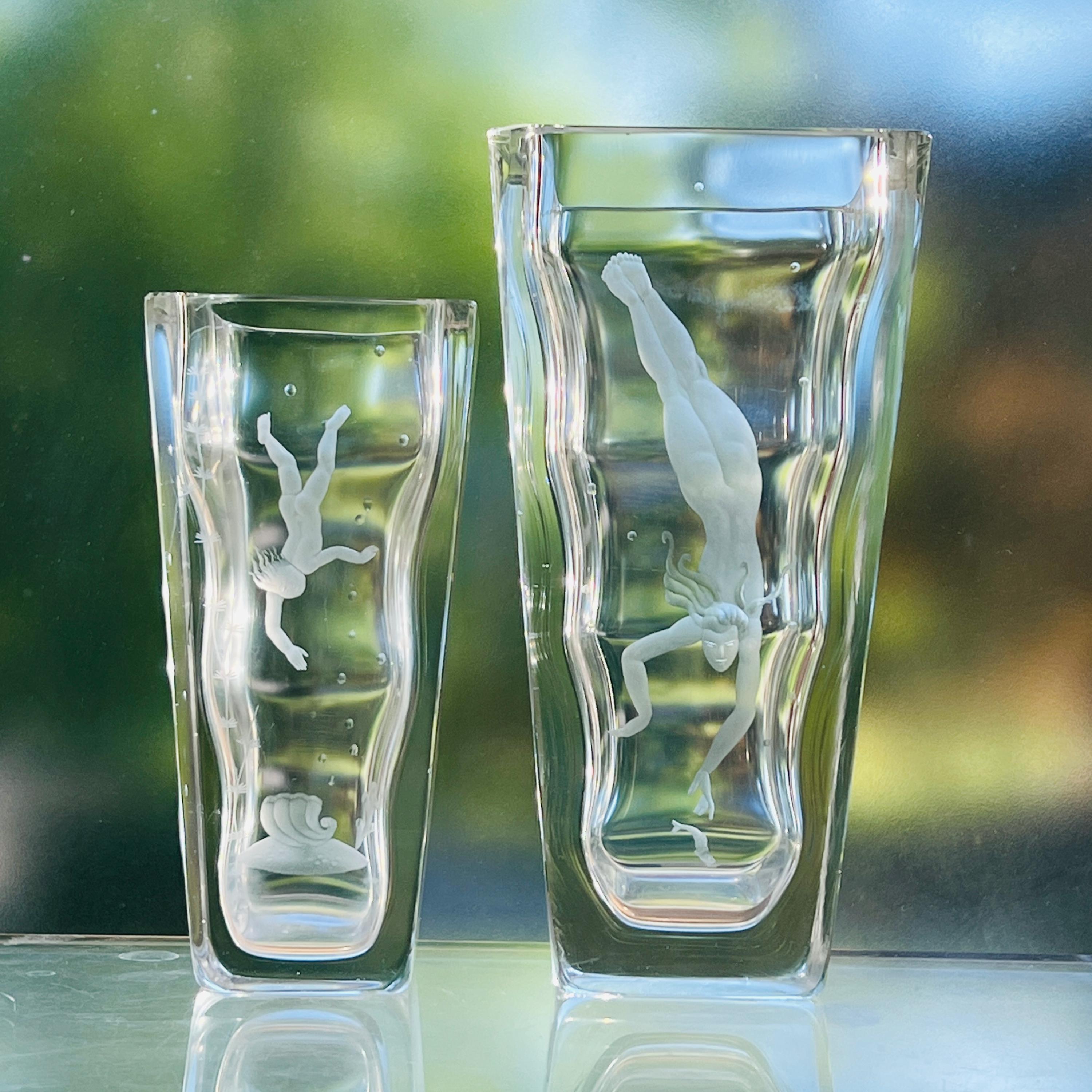
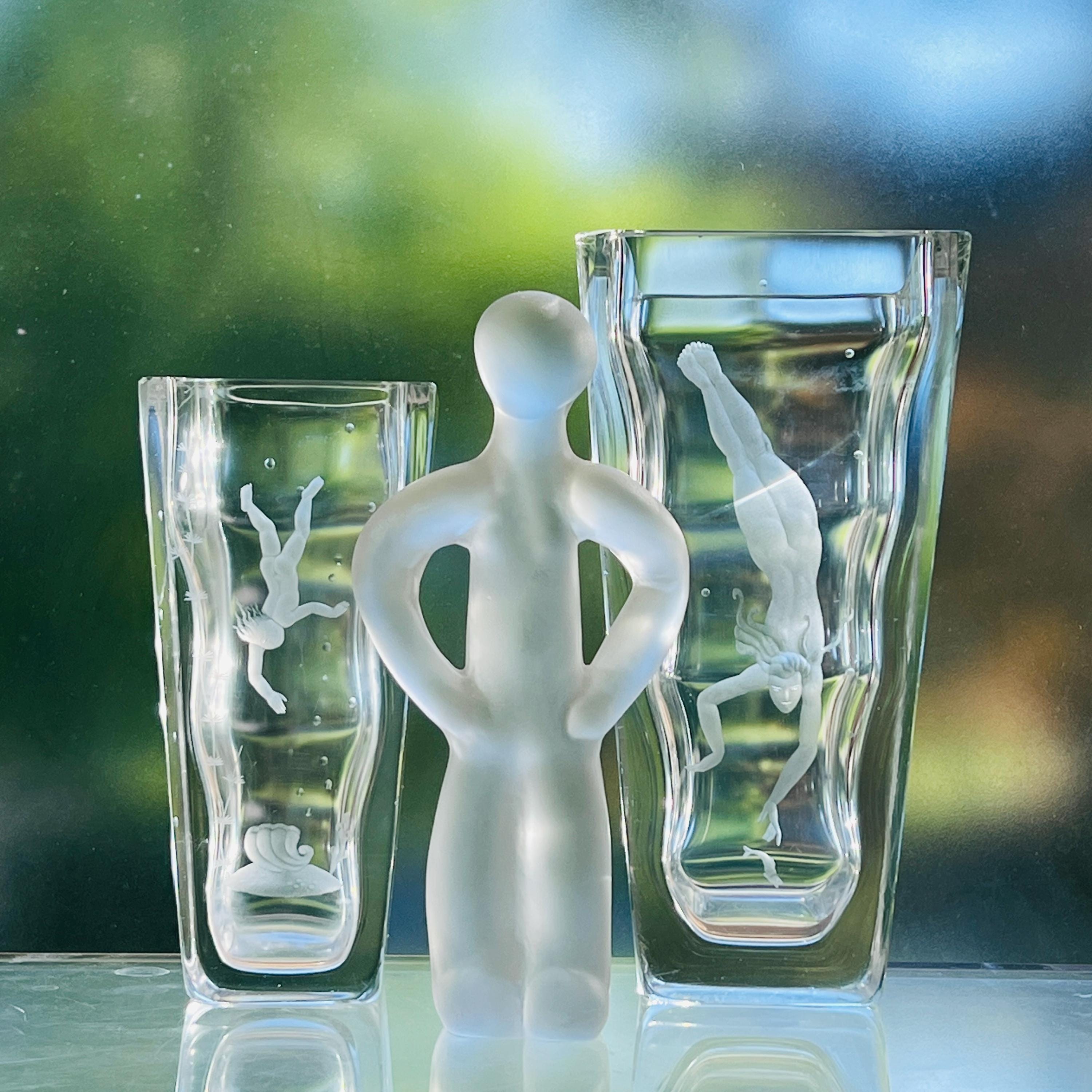
This vase depicts a nude woman, diving down to catch a fish. Vicke Lindstrand first introduced this theme with his seminal 1931 design, Pärlfiskare, Pearl Fisher (also known as Pearl Diver). Lindstrand would go on to design several other water-dwellers, such as Orpheus, Aphrodite, and a variety of mermaids and water-skiers. A few other artists caught the wave, too.
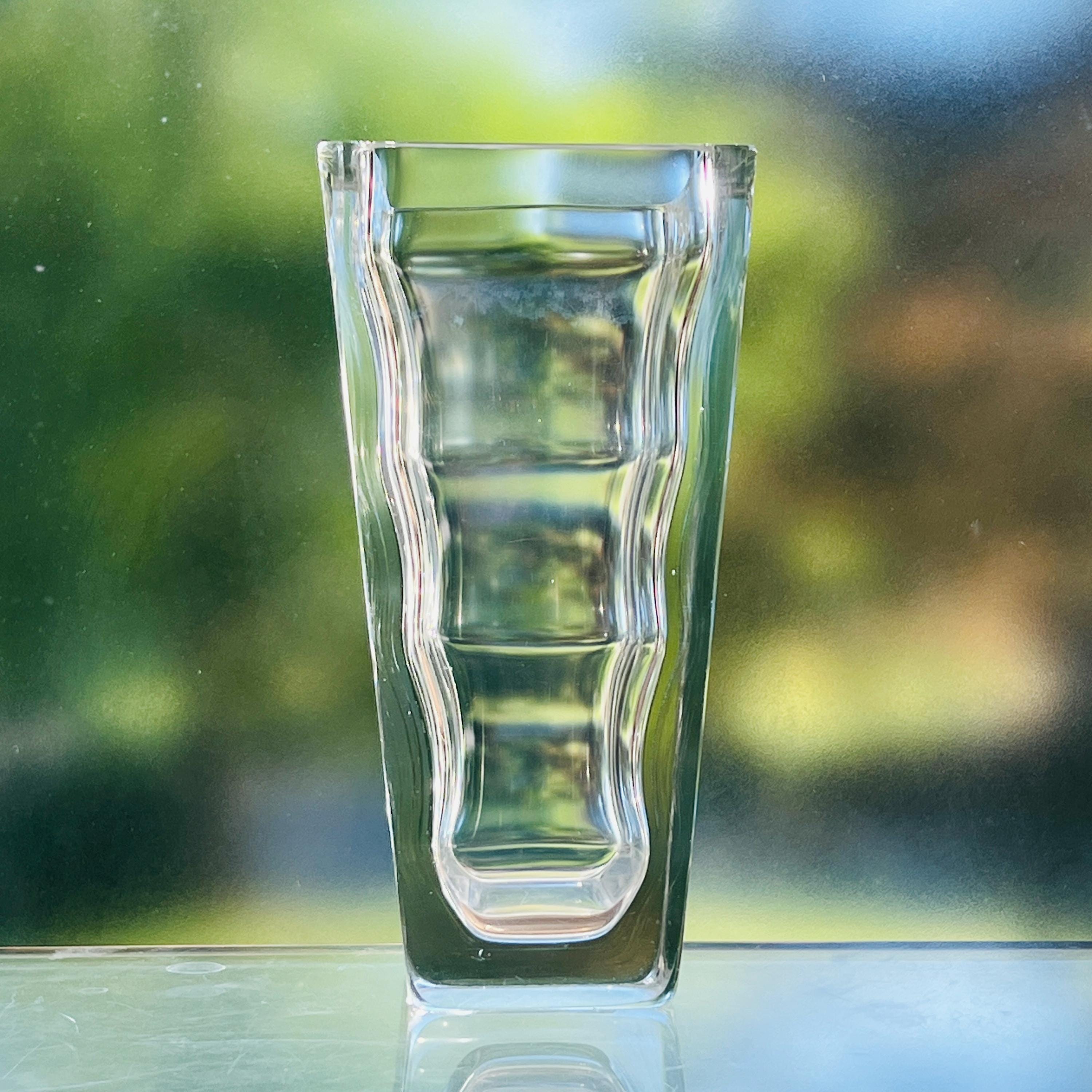
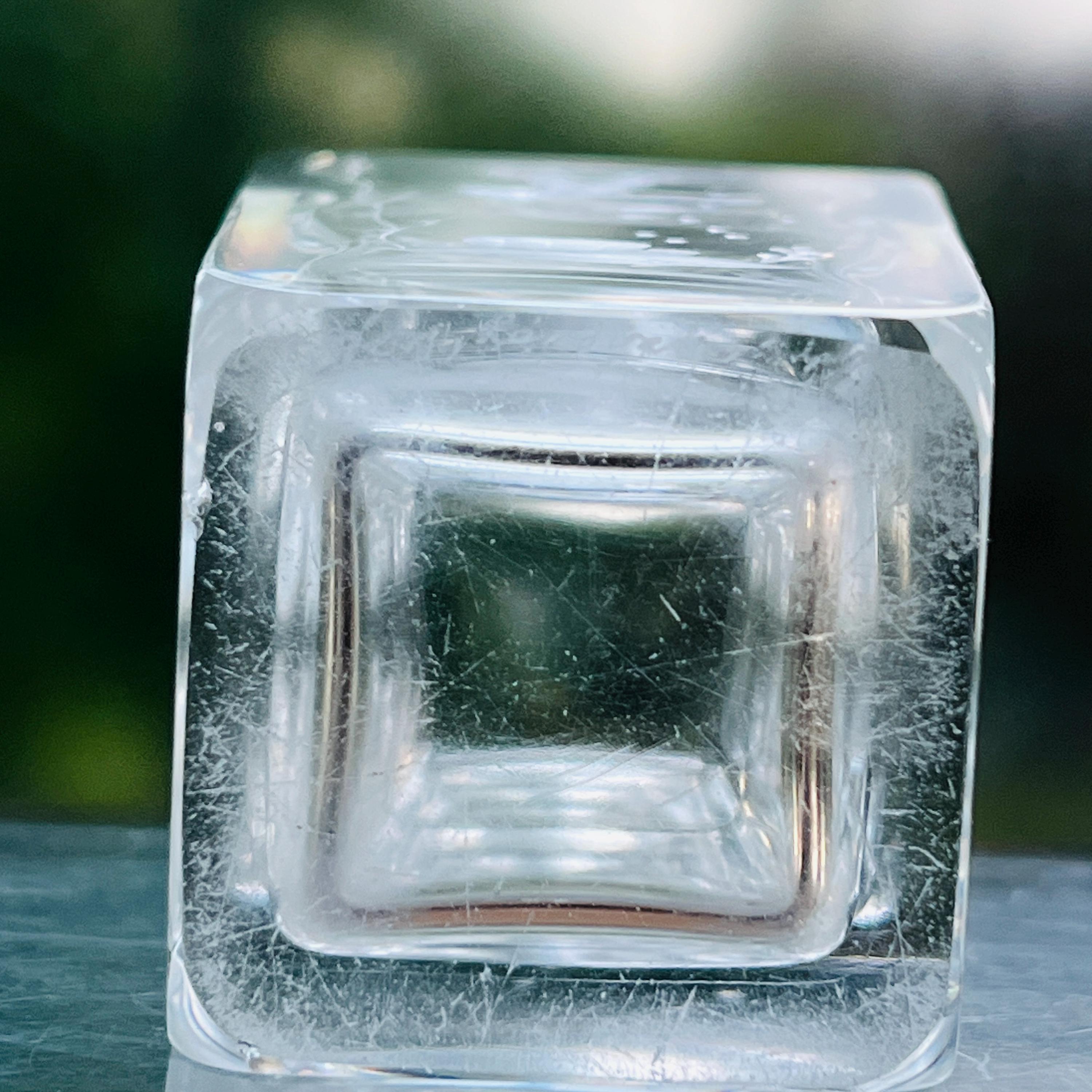
The codes etched on the bottom of an Orrefors piece tell us about when it was designed, when it was made, and by whom. In this case, the engraved image of the woman and fish (style 2381) was designed by Lindstrand in 1940, and it appears in Catalog 16 from 1941. This actual vase was likely made in the mid-1940s, and the engraver was probably Sten Petersson. (Both the date code and the engraver's initials are obscured by scratches , but I have seen another example with clear markings.) The catalog also tells me that the vase shape and optical glass is a Lindstrand design of the same time period; its style number is 2386.
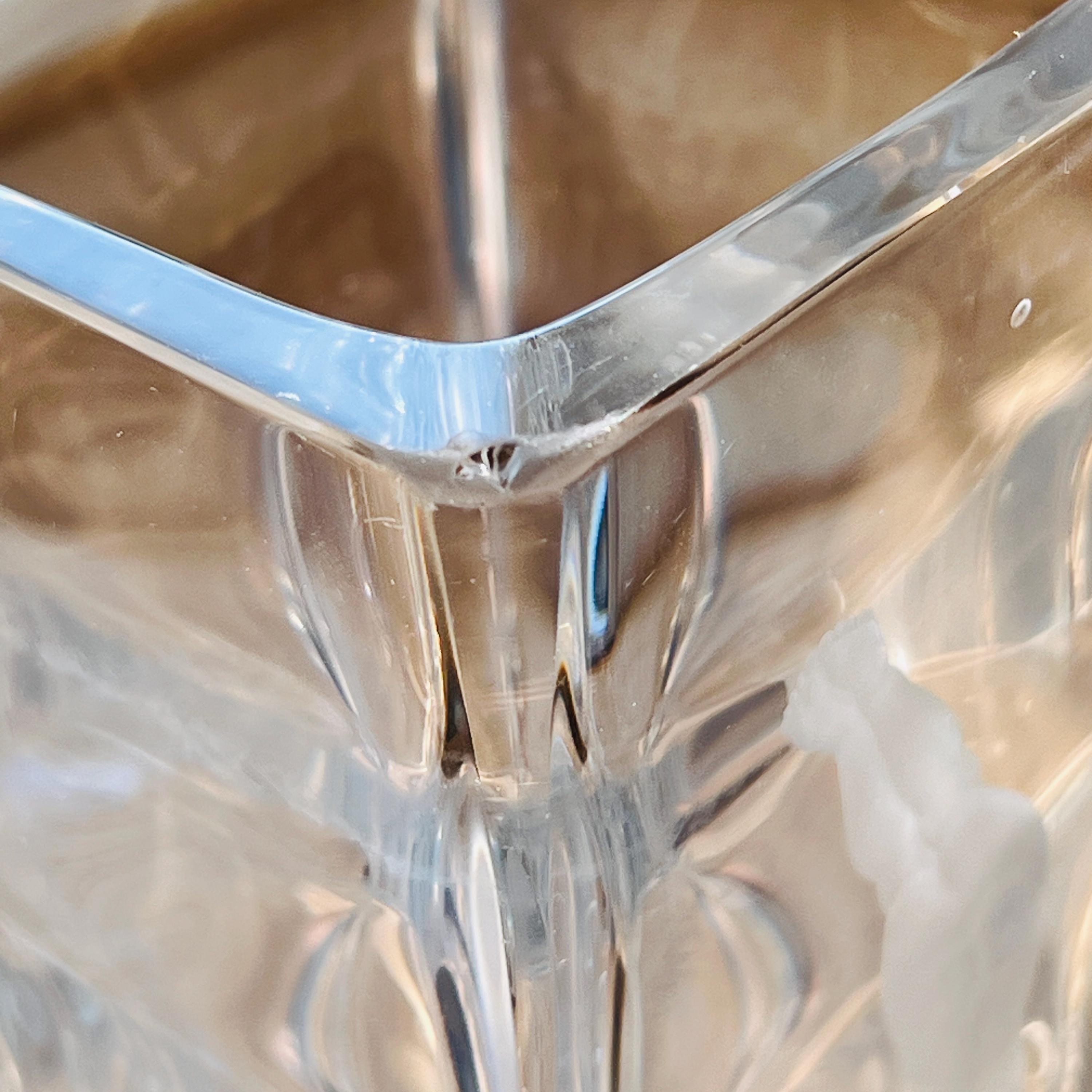
This vase has not lived a sheltered life in a cabinet, and it shows
signs that it was well loved and used. It has a faint watermark, which would need to be polished out. It has a few tiny nibbles on the left front edge and a very small chip on the left front corner. On its base is a web of scratches. The price reflects the condition - I sold the near-perfect one for over $300.
The Orrefors story began in 1726, when an ironworks and smith was built near “the beautiful river that flows into Lake Orranäs” in the Swedish countryside. It was given the name Orrefors, which means “the Orre waterfall.” ("Orre" is the Swedish name for the black grouse, which is the bird seen on their iconic labels.) The foundry was converted to a glassworks in 1898, as the demand for iron decreased. By the mid-1920s, Orrefors was celebrated for the quality and beauty of its glass.
Vicke Lindstrand (1904-1983) was born in Goteborg, Sweden, and started his career with Orrefors in 1928, where he remained until 1940. Between 1943 and 1950 he became creative leader at Uppsala Ekeby Ceramics. In 1950 he joined Kosta Glasbruk as artistic director. He was the dominant designer until his retirement in 1973, lending his name to many now classic designs. As a glass designer, textile and ceramic designer, and painter, he is considered a pioneer of Swedish art. (He is also my favorite Swedish artist, and the one whose work I collect most.)
Shipping from United States
Processing time
1-3 business days
Customs and import taxes
Buyers are responsible for any customs and import taxes that may apply. I'm not responsible for delays due to customs.
Payment Options
Returns & Exchanges
Returns accepted within 30 days
Buyers are responsible for return shipping costs. If the item is not returned in its original condition, the buyer is responsible for any loss in value.
Conditions of return
Buyers are responsible for return shipping costs. If the item is not returned in its original condition, the buyer is responsible for any loss in value.